

STUDY VISIT OF THE WAR COLLEGE OFFICERS TO THE TRB
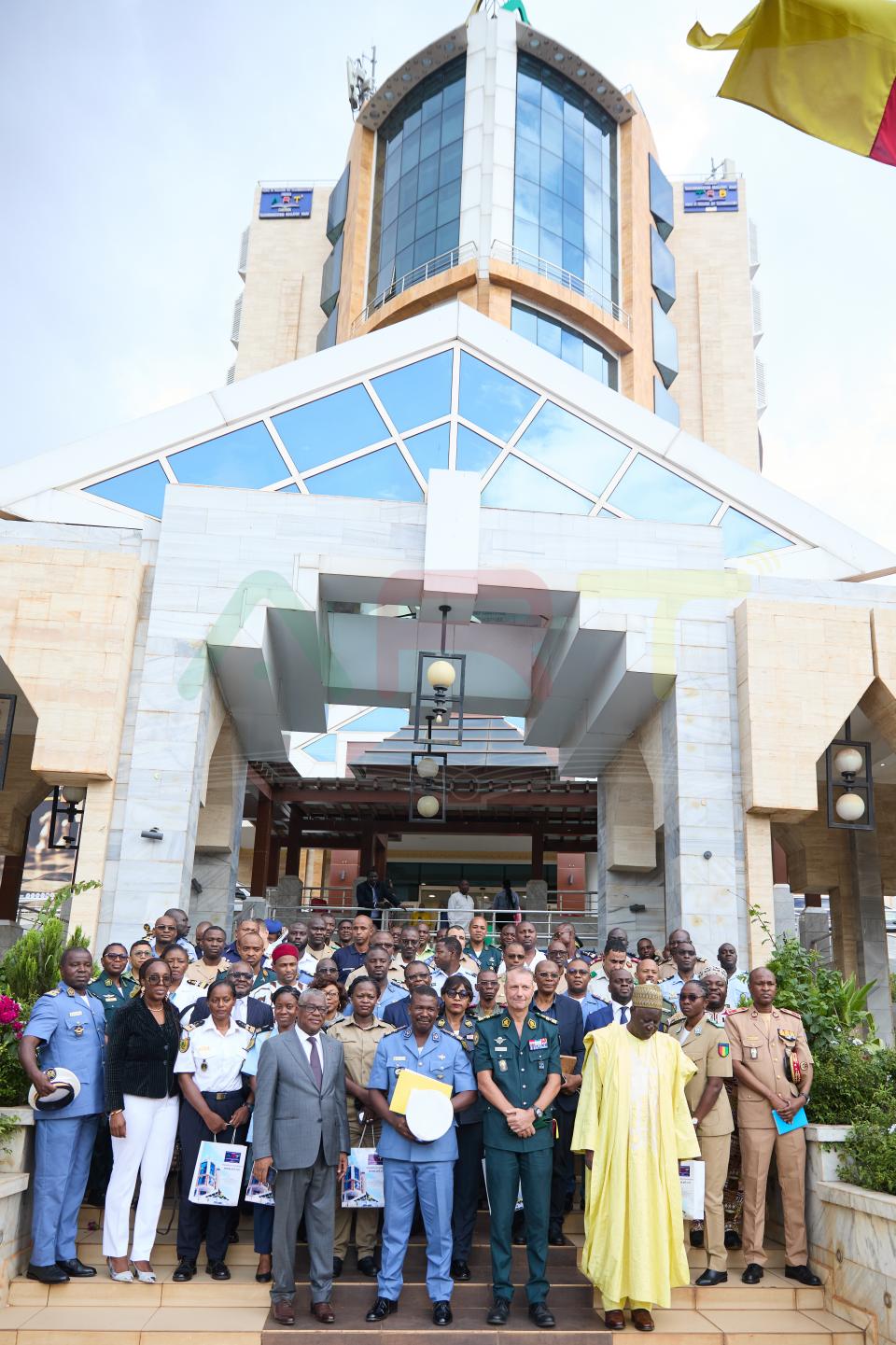
On April 30, 2026, the Telecommunications Regulatory Board (TRB) welcomed the 21st class of the International War College of Yaoundé (ESIG) to the Platinum Building. This visit formed part of ESIG’s “Management” module and once again underscored the central role of the Board in supporting national institutions and maintaining its constant partnership with the defense and security forces.
At exactly 1:00 p.m., the Deputy Director General of the TRB, Zourmba Aboubakar, received Colonel Mpang, Director of Studies and head of the ESIG delegation, accompanied by 62 participants, including 54 trainee officers from Cameroon and 22 other African and European countries. The solemn yet cordial welcome set the tone for a meeting dedicated to cooperation and strategic reflection.
During the session, the officers had the privilege of engaging directly with the Director General of the TRB, Professor Philémon Zoo Zame, who joined the discussions to share his vision and respond to participants’ concerns. Exchanges focused on critical issues: the safeguarding of electronic communications, an essential matter for national defense, and the innovative services and technical infrastructure acquired by the Board to regulate and address technological challenges.
The theme chosen for the visit: “The TRB, a strategic instrument in economic warfare?”, reflected the growing importance of telecommunications in contemporary power dynamics. In a world where information has become a weapon, the mastery and protection of communication networks stand as pillars of national sovereignty.
Through its missions of regulation, oversight, and support for innovation, the TRB positions itself as a key player in this silent battle. The trainee officers were able to appreciate how the Board, beyond its institutional mandate, contributes to strengthening the country’s resilience against digital threats and the challenges of inclusive connectivity.
This encounter illustrated the TRB’s determination to stand alongside the defense and security forces, offering them a practical learning framework and sharing its expertise. It also highlighted the importance the Board attaches to the training of military and civilian elites, within a logic of lasting partnership and shared development.
By hosting ESIG, the TRB reaffirmed its status as a strategic partner of national institutions. This immersion within the Board, far from being an ordinary academic visit, enabled the officers in training to grasp the stakes of telecommunications regulation and to perceive the innovations shaping the future of the sector.
From these exchanges, one conclusion emerged clearly: telecommunications regulation is not merely a technical mission, but a genuine lever of power and stability. By assisting the defense and security forces in defining their strategies, the TRB helps build a solid foundation for peace, national cohesion, and development.
The April 30, 2026 visit will thus remain a significant milestone in the cooperation between the Board and ESIG, demonstrating, if proof were needed, that telecommunications regulation is far more than a public service: it is an instrument of sovereignty, a tool of security, and a driver of development.
ESMA